Dashi: The Stock Behind a Japanese Meal
What kombu, bonito flakes and dried shiitake bring to soup and simmered dishes.
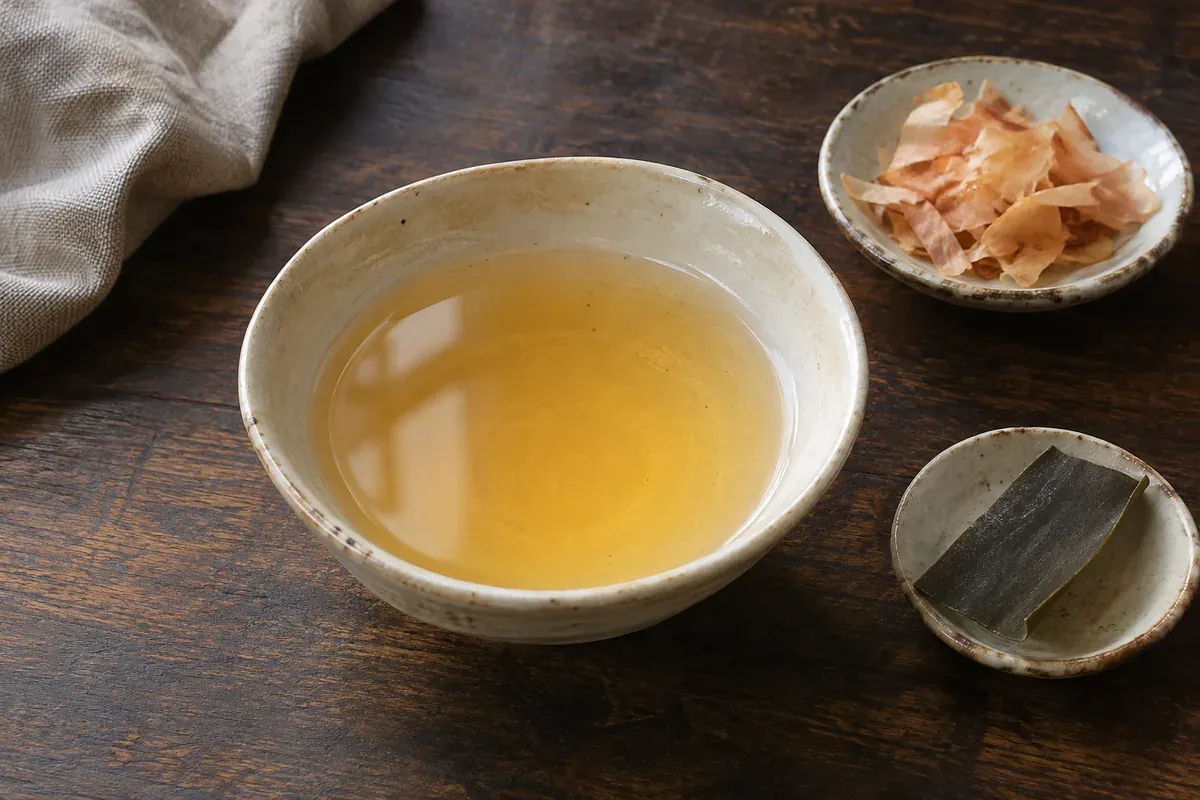
A piece of daikon looks almost translucent after a slow simmer in dashi. Cut into it and the stock runs onto the plate, warm and faintly sweet from the radish. There may be a little soy sauce in the pan, but most of the flavor was there before it went in. In simmered vegetables, you can taste what the stock does even when there’s barely any liquid left on the plate.
Start with the flavor you want
Kombu, or dried kelp, makes a quiet, savory stock that lets soft tofu or tender greens come through. Add katsuobushi, shavings of cured bonito, and the stock takes on a light smoky aroma. That combination, called awase dashi, is a good starting point for miso soup or a pan of daikon. Dried shiitake makes a darker, earthier stock. It can go in with kombu for a fish-free dashi, particularly good with simmered vegetables. The softened mushrooms can be sliced and cooked in the same dish.
From the pot to the table
For a first batch of kombu and bonito dashi, soak 10 grams of kombu in a liter of water for 30 minutes. Heat the pot and lift out the kombu as small bubbles gather, before the water comes to a full boil. Once it boils, add 20 grams of bonito flakes, turn off the heat, let them steep for about two minutes and strain. The flakes release their aroma quickly; there’s no need to keep the pot simmering.
On a weeknight, a dashi bag or instant granules can take the place of that first pot. Check the label if you want a fish-free stock, and taste before adding soy sauce or miso: some products already include salt. Try the stock in a dish with just a few ingredients. Warm a piece of tofu in it, or let a handful of sliced mushrooms simmer in it for a bowl of soup. The next time you make that dish, change the stock and see which version you want another spoonful of.