One Soup, Three Dishes
How a dinner of rice, miso soup and grilled salmon comes together.
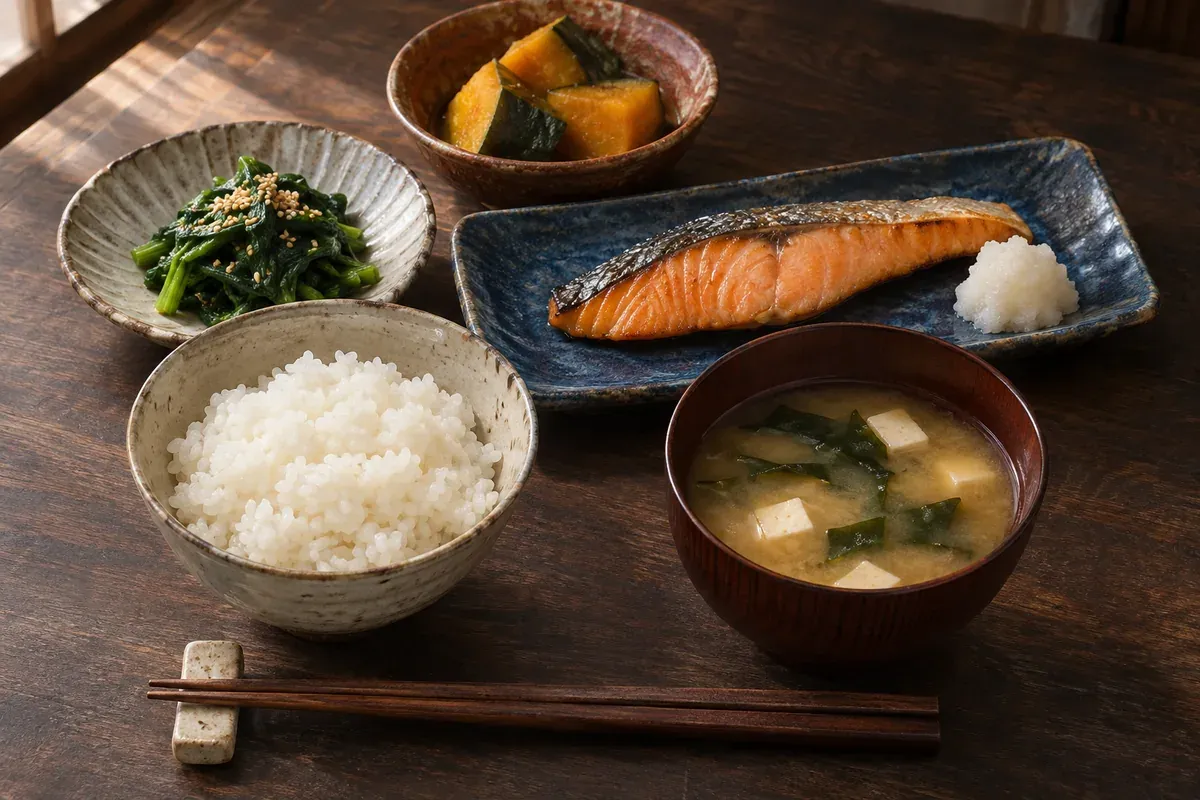
The salmon comes off the grill with crisp skin and a little grated daikon on the side. There’s warm rice, miso soup with tofu and wakame, and two small dishes: spinach dressed with toasted sesame and a few wedges of kabocha simmered until tender. The daikon is cool and sharp against the rich fish. A bite of sweet squash makes the next spoonful of miso soup taste especially savory.
This is one way to set out ichiju sansai (一汁三菜), literally “one soup, three dishes.” Rice is the starting point and sits outside the count. Here the three dishes are the fish, the spinach and the squash. In a traditional place setting, the rice bowl goes at the front left and the soup at the front right.
- Alongside the dishesSteamed rice
- SoupTofu and wakame miso soup
- Main dishGrilled salmon with daikon
- Two small dishesSesame spinach and simmered kabocha
Make room for what’s in season
The squash can simmer while the rice cooks, and the spinach works just as well made earlier and served cool. In spring, asparagus can take the spinach’s place and still taste lovely with sesame. On a night when there’s just one side dish, mushrooms and greens can go into the soup. If daikon is hard to find, a squeeze of lemon gives the salmon a similarly fresh edge.
UNESCO added washoku to its Intangible Cultural Heritage list in 2013. Its entry pays particular attention to New Year and describes a culture of choosing, preparing and sharing food that goes well beyond any one meal. At an ordinary table, that care for ingredients might show up in a small bowl of whatever is in season.
For a first go, start with rice and something you already like cooking. Add soup, then see what’s in the fridge. A few slices of yesterday’s squash are already a side dish. That small plate is often the one worth making a little extra for.