Ozoni: Japan’s New Year Mochi Soup
Three New Year bowls from Kyoto, Kagawa and Miyako.
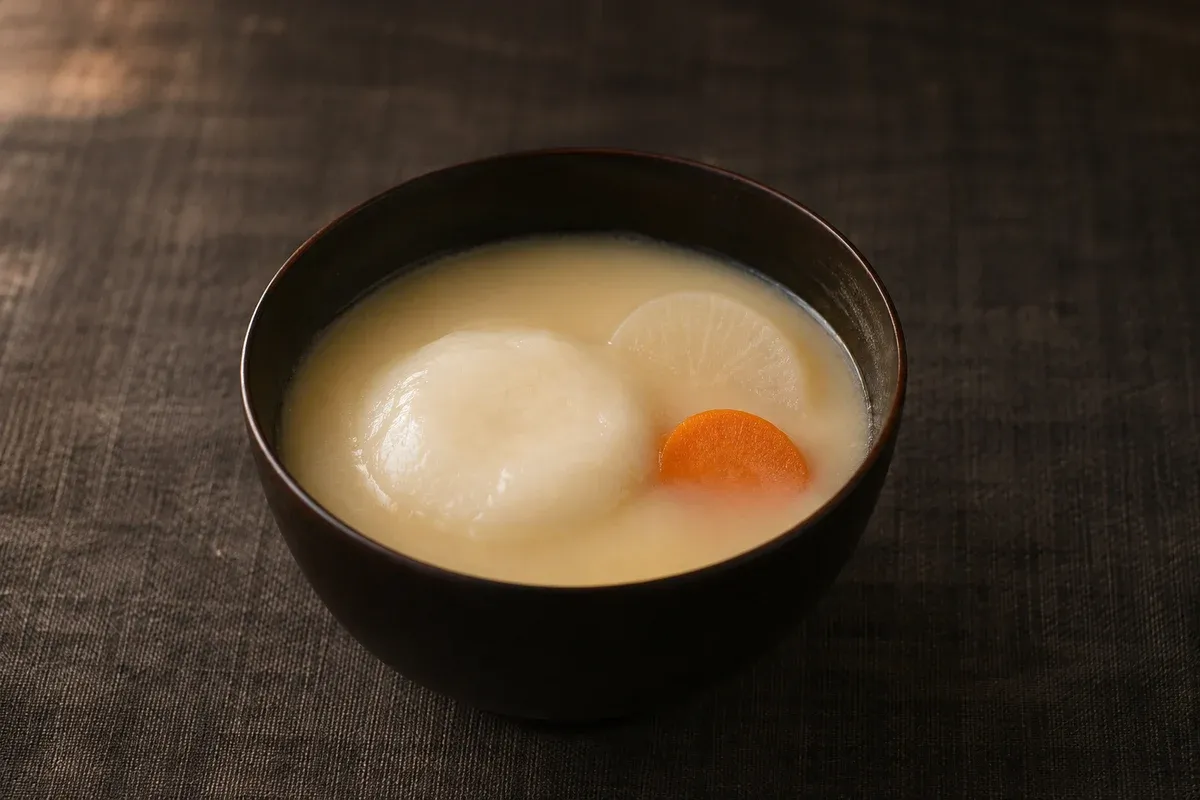
In a bowl of ozoni, the first thing you might notice is the mochi. It softens in the hot broth until it yields to the chopsticks, then stretches a little as you lift it. A toasted piece can have a golden patch on top. In another bowl, the mochi might be round and pale, with a sweet red bean filling tucked inside.
Ozoni is a mochi soup served at the Japanese New Year. Mochi is traditionally made by pounding steamed sticky rice until the grains come together in a smooth, elastic mass. In the soup, its chew sets it apart from the broth and vegetables. The rest of the bowl depends on where you are and whose kitchen you’re in.
Kyoto: White miso and round mochi
In Kyoto, white miso gives the broth its pale color and gentle sweetness. A round rice cake might share the bowl with daikon, carrot and taro. The broth and the mochi are close in color, so the round of red carrot stands out.
Kagawa: Sweet bean paste inside the mochi
Kagawa’s anmochi zoni also uses white miso, this time with dried-sardine stock, daikon and red kintoki carrot. The round mochi holds anko, a sweet red bean paste. The filling adds a deeper sweetness once the mochi opens. The daikon is cut into rounds, a detail that carries a wish for family happiness.
Miyako: A second dish for dipping
On Iwate’s Sanriku coast, Miyako’s kurumi zoni takes a different turn. Toasted square mochi goes into a soy-seasoned stock with vegetables such as daikon, carrot and burdock. Some households add seafood, such as salmon roe or abalone. The finishing touch comes in a separate dish: a thick sauce made from ground walnuts, sugar and a little salt. The mochi can be eaten from the soup or dipped into the sauce, so the same rice cake tastes savory in one bite and sweet and nutty in the next.
In Kagawa, the sweet part is tucked inside the rice cake. In Miyako, it waits beside the bowl. The mochi is what ties these New Year traditions together; the broth, vegetables and small details are what make each bowl feel like home.